The NBA Showed Its Teeth Against The Clippers. The Premier League Should Follow.
08 September 2026
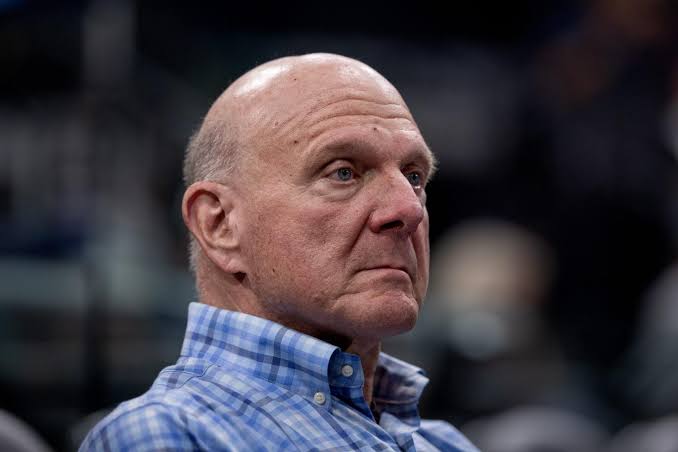
Steve Ballmer bought the Los Angeles Clippers for $2bn in 2014 and has spent every season since bouncing out of his courtside seat like a man who cannot believe his luck. On 2 September, the NBA handed down a punishment that his fortune cannot fix. The club’s first-round draft picks for 2029, 2030, 2031, 2032 and 2033 are gone. Five years of the future, confiscated.
It is the simplest sanction, and the Premier League and other sports organisations should write it into their rulebooks. In any sport or league, a club found to have used financial advantage outside the rulebook to buy an edge should be punished by being prevented from doing so. Formula One has already worked this out. When Red Bull breached the 2021 cost cap, the FIA fined them $7m and cut their wind tunnel time by ten per cent for a year. The fine was noise. The wind tunnel cut hurt more because it took away the team’s ability to develop the car. The same principle applies to football. If a club cheats to get better players, take away its ability to get players. Punish the crime where the crime was committed.
The NBA found that Clippers executives arranged a $28m endorsement between Kawhi Leonard and Aspiration, a green bank Ballmer had put $50m into shortly after Leonard signed a $176m extension in 2021. Leonard did almost nothing for the money. Adam Silver called the breach “flagrant” and the salary cap “the bedrock of competitive balance in the NBA”. The fine was $30m. Ballmer was suspended for a year, and two senior executives lost months of pay.
The Clippers responded by calling the investigation “heavily biased”, a “witch hunt”, a “gross injustice”, and the club is “exploring every legal remedy”. Nowhere did they offer to pay the fine and move on. Ballmer could settle the $30m immediately. The only part of the ruling worth a lawsuit is the picks, because they are the only part Ballmer’s money cannot buy back.
English football has the same problem but is using the wrong tools. Look at Chelsea. Three regulators have now sanctioned the club for the same Abramovich-era payments: 36 secret transfers of money totalling £47.5m between 2011 and 2018, to agents and staff. The Premier League fined them £10.75m in March. The FA fined them £10m in July. UEFA took £8.6m for the related reporting failures. Roughly £30m in total. But £30m for seven years of hidden payments is less than they paid Brighton for João Pedro. It was nothing more than a slap across the wrists.
The league’s other tool is the points deduction, which it has used on clubs that breached the Profitability and Sustainability Rules, the accounting limit on losses over three seasons. Everton were docked ten points, cut to six on appeal, then two more. Nottingham Forest lost four. In both cases, players and supporters were punished for old misdemeanours, and some of those players were not even at the club when the money was spent. It is a quick fix for a historical problem, and the success of Everton’s appeal suggests it is not the strongest sanction in law either. Both clubs stayed up, which I suspect is still a relief at the Premier League. If either had gone down because of a deduction later cut on appeal, the league would have spent more time in court.
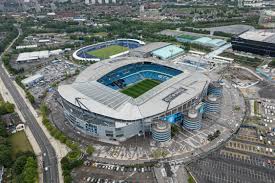
The latest and largest case concerns Manchester City and has been rumbling on for over three years. The club has been charged, since February 2023, with 115 breaches of the league’s financial rules covering 2009 to 2018. The hearing ended in December 2024. There is still no verdict. City continue to deny everything and promise “irrefutable evidence” of innocence.
And they are still buying. David Bernstein, who was Manchester City chairman before the Abu Dhabi takeover and later chairman of the FA, wrote in The Sunday Times that the club’s £440m summer spend, against the background of the charges, “makes a mockery of regulation in England’s top division, supposedly the best-run league in the world.” A club accused of hiding how it paid for players has just paid £125m for Enzo Fernández while the panel deliberates. They are entitled to spend it. Innocent until proven guilty applies to football clubs too. But every window that passes while the case drags on is another squad the league can never unpick, which is exactly why the sanction, when it comes, has to reach into the future.
City may be found not guilty, and if the commission clears them, the argument for the rule still stands. The rulebook needs simplifying, and with the Squad Cost Ratio replacing PSR this season, there will be breaches; let’s write down the sanctions for those. If City are found guilty and handed a fine and a points deduction, can the league afford the appeal that follows? The case has already cost it tens of millions of pounds; City’s lawyers have deeper pockets than the Premier League. Nobody knows what sanction survives contact with them.
They have form. In 2014, the club’s chairman, Khaldoon Al Mubarak, told his own lawyer in an email later published by Der Spiegel that he would rather spend 30 million on the 50 best lawyers in the world and sue UEFA for ten years than accept its verdict. UEFA banned City from Europe in 2020 anyway, and the Court of Arbitration for Sport overturned it. The Premier League does not want that.
A points deduction big enough to matter to a club of City’s strength would need to run to dozens of points, enough to drop them a division or two. Then they appeal. If they win, what happens? Do you reinstate them and run a 21-team Premier League? Every points deduction is a bet that the appeal fails but, more importantly, if the bet is lost, the damage runs well beyond the Premier League: to the Championship club that went down in City’s place, and to the European places handed out on a table that turned out to be wrong.
A transfer ban carries no such risk. City stay in the division. Every match is played on merit, and if the squad decays and they go down, they go down honestly. If the appeal succeeds, they open the chequebook the next morning, and nobody has to rewrite a league table. Players can leave. A points deduction gives them no such choice; they are docked with everyone else. City’s charges are about accounting, and nobody has alleged an illegal transfer. But inflated income has one use under spending rules: it creates financial headroom that lets them spend more, and that money goes to players. Anything illegal that gives a club access to the very best players should be punished by taking that access away.
So put the tariff in the rules and make all twenty clubs sign it. Every season the books were wrong should equal a season, September to September, in which the club cannot buy, loan or register any player aged 18 or over, from anywhere, including any sister clubs. Selling is allowed. Fielding academy players is allowed; that is the club’s problem. The ban starts on conviction, and its length is partly in the club’s hands: self-report and cooperate, and the tariff comes down, as Chelsea’s did; drag the process through every court available, and it goes up. Thirty million on fifty lawyers becomes a bad bet. No discretion, no negotiation, nothing for a commission to agonise over. City’s charges cover nine seasons; hand down nine and let them appeal it down from there. Chelsea’s payments ran across seven, and because the new owners self-reported, they have a strong case for a suspended sentence. But the sanction should have been seven seasons suspended, not the single season suspended for two years that the Premier League gave them.
The sanction has to run for years, because a short ban is a fine by another name. A club can plan for two seasons: buy heavily in the window before it starts and sit tight. Barcelona did exactly that in 2014, signing Suárez, Rakitić and ter Stegen before their ban took effect, and won the treble during it. Chelsea’s 2019 ban lasted one window, and they finished fourth. Two years is the £30m fine in a different currency, and clubs can wear it. Beyond three, it is a different sanction. A club might carry on with its current squad for a couple of years, but eventually the competitiveness drops off and with it the ability to qualify for Europe or go on a big cup run. They would be like any promoted club entering the league, focused on survival, and that is an annual grind. Dropping them a couple of divisions instead would see them run away with the lower leagues until they returned to the Premier League, and it would be farcical to watch. If a banned club dropped out of the division after three or four years, that would be a competitive result.
The tool is available; two English regulators wrote it into Chelsea’s sanctions this year and suspended it. The NBA, to their credit, have used it on the richest owner in their league, and the only thing the Clippers are fighting is the part that hurt. The current rulebook will decide the City case. The club has already beaten the league once over the wording of its own regulations, so a sanction invented after the event will not survive. A transfer ban needs no invention. Hand City a transfer window ban under the rules as they stand, then write the tariff into the rulebook so the next club knows the price before it cheats. Steve Ballmer will sit out this season and be back in his courtside seat in the autumn of 2027, bouncing as ever. The bill arrives in 2029 and keeps arriving until 2033. That is what it looks like when a league shows its teeth.